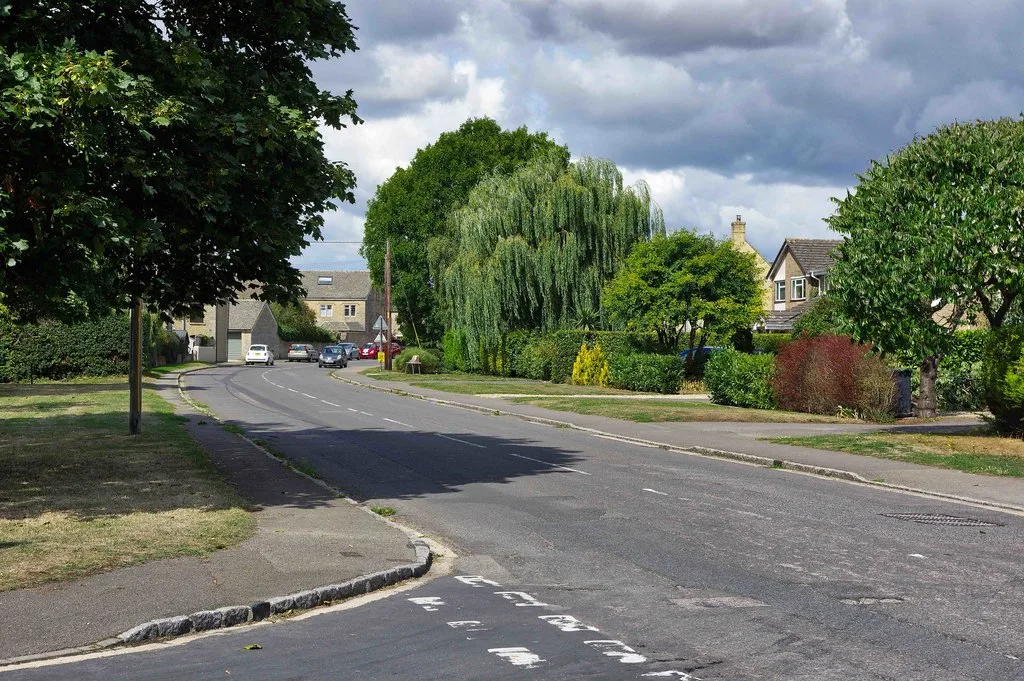
West Oxfordshire councillors decide on Wednesday whether to redraw Witney's town boundary. £50,000 is set aside, and any change would start on 1 April 2029.
West Oxfordshire councillors decide on Wednesday whether to start redrawing the boundary of Witney. Full Council meets at 2pm on 16 September in the council chamber at Woodgreen, and the item in front of it would begin a community governance review of three town boundaries: Witney, Carterton and Chipping Norton.
Witney Town Council has asked for one twice. Nothing else in the district would be looked at.
Why the boundary is in question
Houses have been built right up against these towns, and in places past them, without the town council’s area moving to match. The officers’ report puts it plainly. The three towns “have relatively constrained boundaries and/or development has taken place adjoining existing settlements but outside of town council boundaries”.
The trigger was a motion passed by Full Council on 28 January 2026 asking officers to look at parish and town boundaries across West Oxfordshire. In the debate, members named Carterton and Witney specifically. Officers also understand that Chipping Norton wants to take in land from Over Norton parish.
A review of the whole district is not recommended. The report calls that too complex to attempt at the same time as reorganisation.
Who gets asked first
If councillors agree, each town council and the parishes bordering it are invited to submit proposals. Around Witney that means four:
- Curbridge Parish Council
- Ducklington Parish Council
- Hailey Parish Council
- South Leigh Parish Council
Carterton’s neighbours are Alvescot, Black Bourton, Brize Norton and Shilton. Chipping Norton’s are Chadlington, Churchill and Sarsden, Cornwell, Enstone, Heythrop, Over Norton, Salford and Spelsbury.
What moving a boundary would actually change
A community governance review is the only legal way to alter a parish boundary. It can also change parish warding and the number of town and parish councillors. The report lists what else follows:
- where Community Infrastructure Levy money from new development is spent
- the council tax bill of the affected properties, because town precepts are generally higher than village ones
- the tax base and income of every council involved
- the electoral arrangements of the towns, the parishes and any future unitary council
The money is not trivial. Witney is the most expensive parish in West Oxfordshire to live in, and the gap with its neighbours is the clearest reason a boundary move would be argued over.
| Parish | Band D charge | Difference from Witney |
|---|---|---|
| Witney | £2,652.79 | - |
| Hailey | £2,550.49 | £102.30 less |
| Ducklington | £2,510.70 | £142.09 less |
| South Leigh | £2,508.02 | £144.77 less |
| Curbridge | £2,494.64 | £158.15 less |
The report is firm that this cannot be the reason for a change. Council tax and infrastructure money “are not considered to be valid reasons for considering administrative boundary changes in a CGR”. The case has to rest on residents’ sense of place and where they actually use services. Officers still expect a fight: “any proposed changes are likely to be contested locally as there will be competing communities of interest”.
The timetable runs to 2029
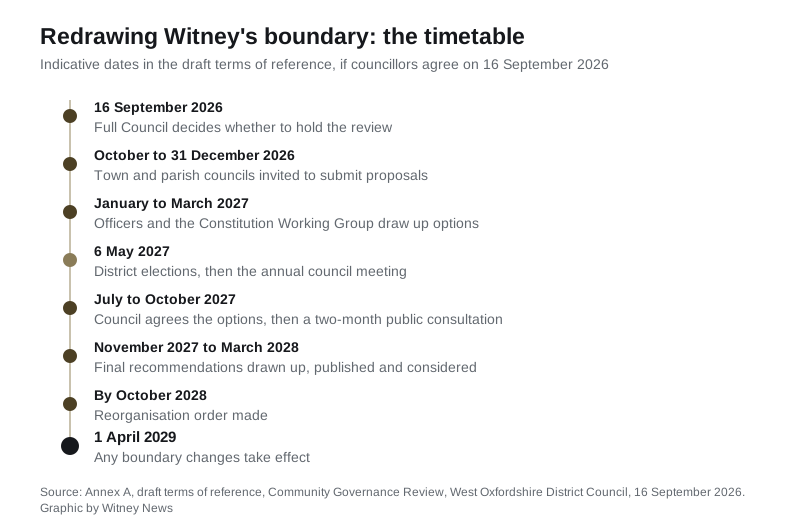
The dates in the draft terms of reference are these:
- 16 September 2026: Full Council decides whether to hold the review at all
- October to 31 December 2026: town and parish councils have three months to submit proposals
- January to March 2027: officers and the Constitution Working Group work up options
- July 2027: Council considers the options and decides whether to consult the public
- September to October 2027: two-month public consultation
- November 2027 to January 2028: final recommendations drawn up
- March 2028 at the latest: recommendations published and considered
- By October 2028: a reorganisation order is made
- 1 April 2029: any changes take effect
The public gets its say in autumn 2027, not this year. The first stage is between councils.
The reorganisation pause changed who decides
The report was written before the government paused the abolition of West Oxfordshire District Council on 7 September, and says so: it “has been reviewed and updated in light of it prior to publication on 8 September”.
That announcement matters here. Under the old timetable the district council could have started a review but not finished it, because the power to make the order would have passed to the new unitary council once the structural changes order came into force. Officers now say that “in view of the government announcement on 7 September 2026 it may be that the Council would be able to complete a view and be the decision maker prior to any SCO taking effect”. Every mention of vesting day in the report now reads “previously 1 April 2028, now TBC”.
What is deliberately left out
- Salt Cross, the garden village near Eynsham, is excluded. Officers say a new parish should not be created before enough people live there for one to work.
- Broad allocations in the draft Local Plan 2043 are excluded as premature, because they may not be built within five years.
- Parish boundaries anywhere other than Carterton, Chipping Norton and Witney.
- Turning parish meetings into parish councils, and councillor numbers elsewhere.
£50,000 was set aside in the budget after the January motion. The report says a review limited to the three towns fits inside that. A district-wide one would not, and would need a further report and more money.
Also on Wednesday’s agenda
Councillors will be asked to replace the Strategic Planning Committee and the Development Management Sub-Committee with a single 12-member Planning Committee after the October meeting cycle, to comply with the national scheme of delegation that takes effect on 31 October.
There is also a question to the leader from Cllr Thomas Ashby about handing council assets to town and parish councils before reorganisation. “Many councils are suffering from anxiety by not knowing what assets and services may be heading their way,” it says.
What it means for you
If you live on the edge of Witney, or in Curbridge, Ducklington, Hailey or South Leigh, this is the process that could move you from one parish into another. That would change the parish part of your council tax bill, who runs the recreation ground nearest you, and who you vote for at parish level.
Nothing is settled on Wednesday. The only decision is whether to start.
If you want to influence it early, the people to talk to between October and December are your own town or parish councillors, because the first stage takes proposals only from councils. The public consultation follows a year later. The meeting is webcast, and the agenda and papers are published in full.
Sources
- Community Governance Review, report to Council, 16 September 2026, West Oxfordshire District Council, published 8 September 2026, for the recommendations, the rationale, the £50,000 budget, the consequences of a boundary change and the effect of the reorganisation pause.
- Annex A, draft terms of reference for the scope, the list of parishes invited and the indicative timetable to 1 April 2029.
- Agenda for Council, Wednesday 16 September 2026 for the venue, the time, the planning committee item and Cllr Thomas Ashby’s question.
- Council tax charges 2026/27, West Oxfordshire District Council, for the Band D figures for Witney, Curbridge, Ducklington, Hailey and South Leigh.
Have your say