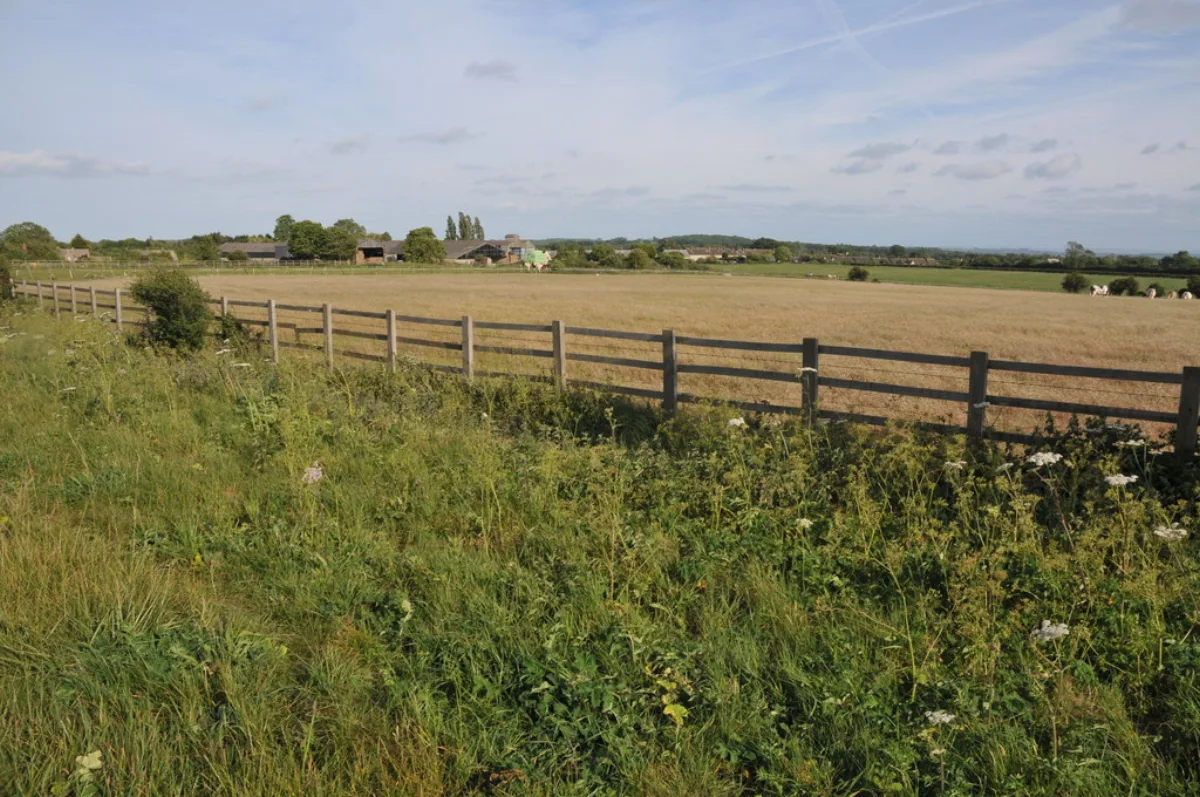

The draft Local Plan sets 18,318 homes by 2043, with three sites of 700 each around Witney. Comments close 9 October; the Witney drop-in is 1 September.
West Oxfordshire District Council’s draft Local Plan 2043 proposes 18,318 new homes across the district, and the consultation on it is open now. The council published the Regulation 19 pre-submission draft on Wednesday 26 August 2026, and comments close on Friday 9 October 2026. That is the last chance to comment before an independent inspector takes over.
Three areas on the edge of Witney are named for about 700 homes each, and a drop-in with planning officers runs at the Corn Exchange in Witney on Tuesday 1 September, 4pm to 7pm. Full detail, including the district-wide figures and the council leader’s own warning about sewer capacity, is in our report: West Oxfordshire Local Plan: 2,100 homes on Witney’s edge.
The Executive agreed the draft on 15 July 2026 and Full Council approved publication on 22 July. The plan is due to be submitted for examination before the end of December 2026.
Where the 18,000 figure comes from
Two numbers, added together.
The district’s own assessed need under the government’s standard method comes to around 16,290 homes to 2043. On top of that the council has agreed to take a further 2,000 homes to help Oxford City with its unmet need, which the city cannot build inside its own boundary. That is what produces the “just over 18,000” headline. The draft also allocates almost 30 hectares of new employment land.
The plan period matters too. The plan was originally the Local Plan 2041; the end date was pushed out to 31 March 2043 so that it covers a minimum of 15 years from the date it is expected to be adopted, which is what national policy requires.

The consultation that shaped the draft ran from 3 November to 22 December 2025 on preferred spatial options, and drew more than 6,900 comments, which the council says is over three times the response to the equivalent stage of the last Local Plan.
What is proposed around Witney
The draft plan gives Witney three strategic locations, labelled WIT 5, WIT 6 and WIT 7 in the policy text. The council published an addendum of changes alongside the draft, and the detail below comes from that document.
WIT 5 is the big one: a coordinated, landscape-led new settlement adjoining Witney, to be masterplanned with regard to its relationship with Curbridge, Ducklington and the A40. Two constraints are written into the policy and both are local knowledge rather than boilerplate. Development must not prejudice the future expansion of Witney sewage treatment works, with a buffer between the two, and proposals must be supported by assessments of odour, noise and air quality with particular regard to the sewage works and the abattoir.
WIT 6 is a scheme of around 700 homes with employment provision and provision for travelling communities, plus 10 hectares of employment land and on-site education linked to it. Its heritage requirements name the Minster Lovell Conservation Area, which places it on the western side of the town.
WIT 7 is a coordinated northern or north-western extension to Witney in two parcels. The addendum specifically requires the masterplan to address the future of Dry Lane, including measures to limit or avoid rat running through Crawley.
All three are tied to a proposed Carterton, Witney, Eynsham and Oxford Mass Rapid Transit corridor, with land to be safeguarded for the route and for an interchange. Mass Rapid Transit here means a high-frequency bus based network on dedicated corridors or priority lanes, not a railway.
And around the rest of the district
Carterton takes two strategic locations of roughly 1,500 to 2,000 homes each, one of them described as a landscape-led new village to the north of Carterton within Brize Norton parish. One carries 10 hectares of employment land with a particular focus on defence and aerospace, or other sectoral links to RAF Brize Norton, along with education provision tied to those employers. The policy also protects the future requirements of Carterton Football Club and the Kilkenny Lane Country Park.
Chipping Norton has an allocation on its eastern edge, with access from London Road, Banbury Road or other points on the local network, and a requirement to retain the street trees along London Road.
Salt Cross Garden Village at Eynsham is already allocated in the adopted plan: around 2,200 homes north of the A40, supported through the government’s garden village programme. Its Area Action Plan, which sets the detailed masterplanning rules, was adopted on 25 February 2026.
The other decision hanging over the district
Not everything is the council’s to decide. Botley West Solar Farm is a Nationally Significant Infrastructure Project covering roughly 1,400 hectares across West Oxfordshire, Cherwell and the Vale of White Horse, with an 840MW grid connection. If consented it would be the largest solar generating station in the UK.
The application went to the Planning Inspectorate on 15 November 2024 and was accepted for examination on 13 December 2024. The decision sits with the Secretary of State, not the district council: West Oxfordshire is a host authority and is involved in the examination but does not determine it. The statutory deadline was 10 May 2026 and has been extended, with a decision now due no later than 10 September 2026.
What changes for planning applications on 31 October
From 31 October 2026 a new National Scheme of Delegation takes effect and ward councillors lose the ability to call an application in to planning committee. Only larger developments, or those with significant issues, will go to members.
West Oxfordshire has put a number on what that means locally: around 5 per cent of applications currently go to committee each year, and the council expects that to fall to about 3 per cent. In practice roughly 97 out of every 100 decisions will be taken by officers under delegated powers.
If you object to something near you after October, the objection still counts, but the route of asking your district councillor to send it to committee will largely be closed.
The framework that still applies today
Until the new plan is adopted, decisions are made against the West Oxfordshire Local Plan 2031, adopted on 27 September 2018. The council’s own Regulation 10A review in 2023 concluded that although its policies remain broadly consistent with national policy, many need updating, particularly the housing requirement, which rests on evidence dating from 2014. That gap is the whole reason for the new plan.
Alongside it sit four adopted supplementary planning documents (the Design Guide, Affordable Housing, Developer Contributions and the Combe Village Design Statement) and ten adopted neighbourhood plans, including Chipping Norton, Eynsham, Charlbury, Woodstock, Cassington, Hailey, Shilton, South Leigh, Milton under Wychwood and Brize Norton, the most recent, adopted on 11 September 2025. Seven more are in progress, among them Ducklington, Hanborough, Minster Lovell and North Leigh.
To check a specific application, search the council’s planning register at publicaccess.westoxon.gov.uk, which publishes the weekly list of validated applications with documents and case officer details.
Frequently asked questions
How many homes will be built in West Oxfordshire?
The draft Local Plan 2043 provides for 18,318: 16,290 to meet the district’s own need and a further 2,028 towards Oxford’s unmet need.
When can I comment on the West Oxfordshire Local Plan?
Until Friday 9 October 2026. The Regulation 19 pre-submission draft was published on 26 August 2026 for a period of just over six weeks. This is the formal stage at which representations go to the planning inspector, and comments have to address whether the plan is legally compliant and sound. Comments go through the council’s consultation platform.
Is a new town being built next to Witney?
The draft plan proposes a new settlement adjoining Witney (policy WIT 5), masterplanned in relation to Curbridge, Ducklington and the A40. It is a proposal in a draft plan, not a permission.
What is Salt Cross Garden Village?
An allocation of around 2,200 homes north of the A40 near Eynsham, in the adopted Local Plan 2031. Its Area Action Plan was adopted on 25 February 2026.
When will Botley West Solar Farm be decided?
A decision is due no later than 10 September 2026, from the Secretary of State rather than the district council.
Will my councillor still be able to call in a planning application?
Not after 31 October 2026. Under the National Scheme of Delegation, the share of applications going to committee in West Oxfordshire is expected to fall from about 5 per cent to about 3 per cent.
Sources
- West Oxfordshire Local Development Scheme, July 2026 for the plan timetable, the 2031 plan’s adoption date, the Regulation 10A review, Salt Cross, supplementary planning documents and neighbourhood plans.
- Annex D, Regulation 19 Draft West Oxfordshire Local Plan 2043 Addendum for the WIT 5, WIT 6, WIT 7, CA7, CA8 and CN3 policy changes and the Mass Rapid Transit definition.
- Executive agrees ambitious Local Plan for West Oxfordshire, 15 July 2026 and Council to consider ambitious draft Local Plan, 30 June 2026 for the housing and employment figures and the consultation response count.
- Local Plan 2043, West Oxfordshire District Council for the Regulation 18 consultation history and the 26 August to 9 October 2026 consultation dates.
- Draft Local Plan 2043, Proposed Submission consultation document, August 2026 for the 18,318 housing requirement and Policies WIT5, WIT6 and WIT7.
- Botley West Solar Farm, West Oxfordshire District Council for the application and acceptance dates and the council’s role.
- Government changes to mean fewer planning decisions will be made by elected councillors from October, 5 August 2026 for the National Scheme of Delegation and the 5 to 3 per cent figures.
- West Oxfordshire planning register for individual applications.
Draft plan policies change between publication and adoption. Check the council’s own documents before relying on any figure here.
Eighteen thousand homes is a demand-side story as much as a supply one. Witney house prices has what people are paying now, and why West Oxfordshire is the only local measure currently falling.
Have your say