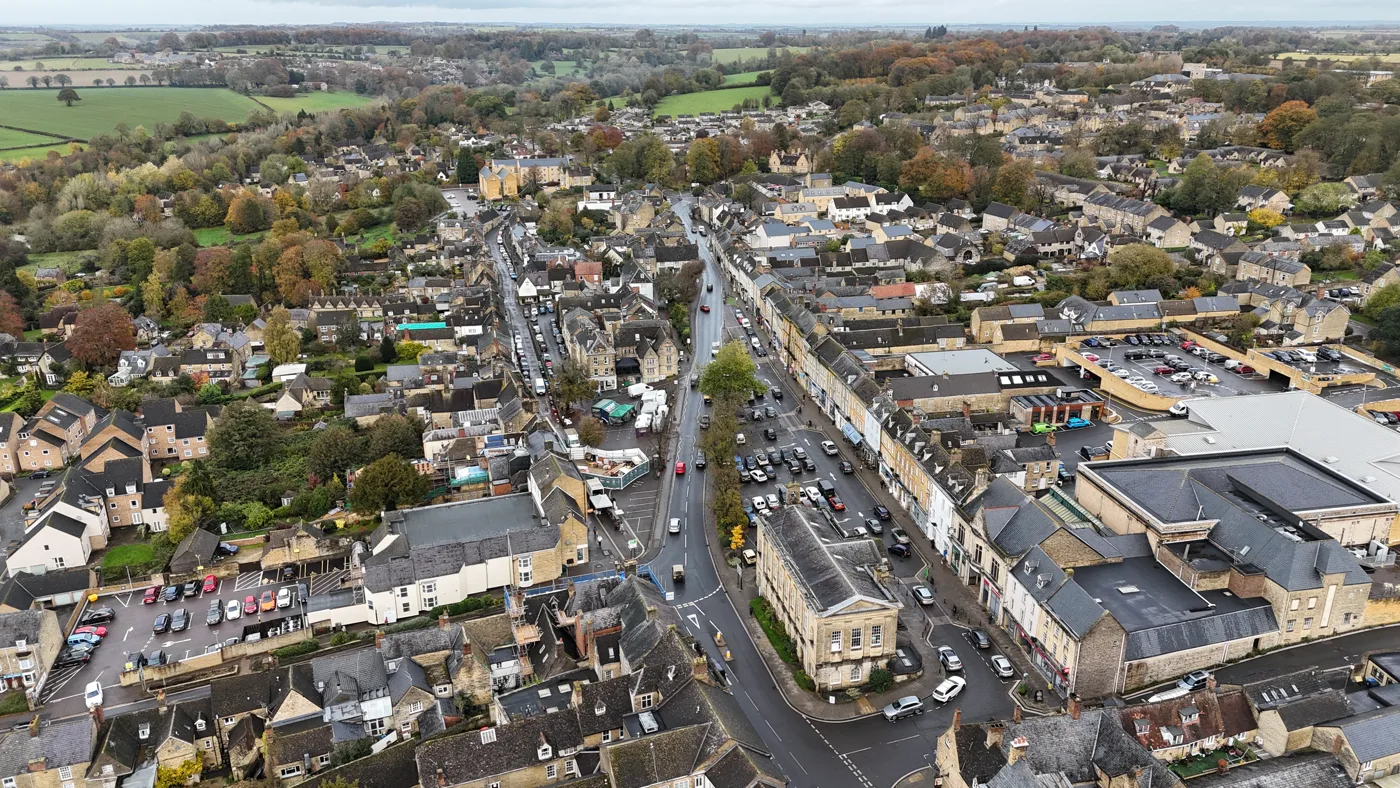

Air pollution on Witney’s Bridge Street and on Chipping Norton’s High Street and Horsefair has stayed below the national safety threshold for at least three years in a row, so the two Air Quality Management Areas declared there in 2005 are to be scrapped.
West Oxfordshire District Council’s Executive was asked on Wednesday 11 November to approve a new district-wide air quality strategy and to revoke both zones once that strategy is adopted, according to the report to the meeting. The council announced the plan on 12 November. The strategy is expected to take about 12 months, and the zones stay in place until it is done.
Councillor Alistair Wray, the council’s Executive Member for Environment, said: “It’s really positive news that air quality has improved in Witney and Chipping Norton. Cleaner air is better for everyone’s health, particularly children, older people and those with breathing problems. But we know there is still more to do. We want to build on this progress and make sure improving air quality remains a priority for communities across West Oxfordshire.”
Why the zones were declared
Both areas were declared on 1 March 2005 because yearly average levels of nitrogen dioxide were above the UK objective of 40 micrograms per cubic metre. Monitoring before 2005 found the problem on Bridge Street in Witney and on Horsefair in Chipping Norton, the report says.
In Witney, Bridge Street was until this year the only practical way for traffic to cross the River Windrush between the town and places to the north and north-east. Queues built up at the roundabouts with Mill Street and West End, and the unbroken rows of buildings on both sides of the street trap the exhaust, the report says.
In Chipping Norton, High Street and Horsefair carry the A44, a secondary freight route from Oxford towards Moreton-in-Marsh, Evesham and on to Aberystwyth. Congestion builds at the sharp turn where High Street meets New Street, at the pedestrian crossing and where the road narrows into Horsefair.
What brought the levels down
Defra, the government’s environment department, recommends removing a zone after three straight years with nitrogen dioxide below 36 micrograms, 10% under the objective. Both towns now meet that test, levels are still falling, and Defra has asked the council to revoke the zones, the report says.
Few of the measures in the council’s 2024 action plan for the two towns have been fully carried out, the report says, so officers put the improvement down mostly to changes in how people travel and what they drive:
- more people working from home since the Covid pandemic
- more meetings held online
- cleaner petrol and diesel engines and exhausts
- more low and ultra-low emission vehicles
- the 20mph speed limit, which the report lists among the likely factors
The new Shores Green junction on the A40, finished in summer 2026, adds slip roads so traffic heading between the A40 west of Witney and the north of the town no longer has to go through the centre. Its effect on Bridge Street will not be known until early 2028, the report says, but the council expects less town-centre traffic to cut pollution further.
Monitoring in Witney carries on at sites including 10, 20 and 25 Bridge Street, West End, Woodgreen Hill and Newland. In Chipping Norton the sites include West Street, High Street and two on Horsefair.
The new strategy
The district-wide strategy replaces the current action plan, which covers only the two towns. The council says it matters most in Witney, Carterton, Eynsham and Chipping Norton, where a lot of new housing, and more traffic with it, is expected over the next five to ten years.
It will cover the sources of pollution, planning, highways, industry, farming, domestic burning, indoor air and public awareness, and will commit the council to keep monitoring at the old zones and at other sites across the district. A steering group will work on it, and residents will be asked for their views in a public consultation.
A specialist consultant is likely to be hired at a cost of about £8,000 to £14,000. An unspent £7,569 from the action plan budget will go towards it, and the council says its reserves can cover the rest.
The council has limited power over the main cause. Roads, traffic management, bus services and walking and cycling routes are run by Oxfordshire County Council, and most of the measures likely to make a big difference were county projects, the report says. Keeping the zones would make little difference to county decisions either, it adds, because the county would put its money into places still breaking the limits.
Witney Town Council and Chipping Norton Town Council have been told about the plan.
Have your say