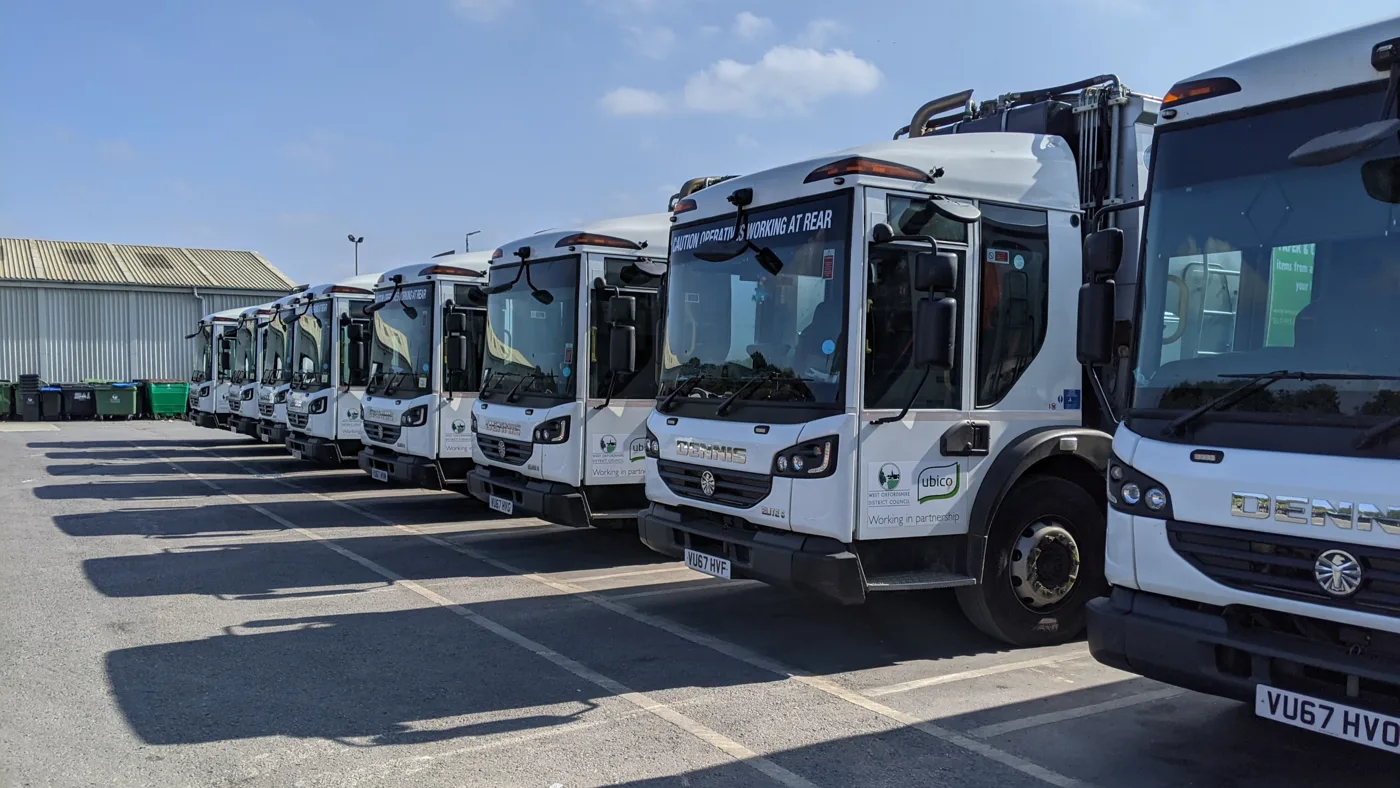

West Oxfordshire is replacing 16 worn-out bin lorries for £3.5m: 2 electric, 14 able to run on HVO, a fuel that costs the council about £120,000 a year more.
West Oxfordshire District Council has approved £3.5 million to replace 16 diesel waste collection vehicles that are at or past the end of their working lives. Two of the replacements will be electric. The other 14 will be able to run on diesel or on Hydrotreated Vegetable Oil (HVO), a renewable fuel the council now plans to buy instead of diesel, the council said on 21 October.
The decision went to the council’s Executive on 21 October. Its report is blunt about why: the fleet has “exceeded its planned replacement cycle, resulting in increasing breakdowns, greater reliance on hired vehicles and growing operational costs”, and “a tipping point has now been reached”.
Why the lorries were kept too long
The council normally replaces heavy vehicles after seven years, and vehicle-mounted road sweepers often after five, the report says. It held on to the older lorries because it expected a second generation of electric bin lorries to be ready to replace them. That technology “has taken far longer to be developed than anticipated”, and the delay is now “having an impact on front line services”.
The report gives the cost of waiting:
- In June 2026 there were 136 hours in which at least one vehicle was off the road for unscheduled repairs. Every vehicle involved was past its planned lifespan.
- Vehicle repairs cost £433,725 in 2025/26, against a budget of £371,423, an overspend of 16.7%.
- Some vehicles became too expensive to repair and were replaced with hired ones, which cost more to run than the council’s own.
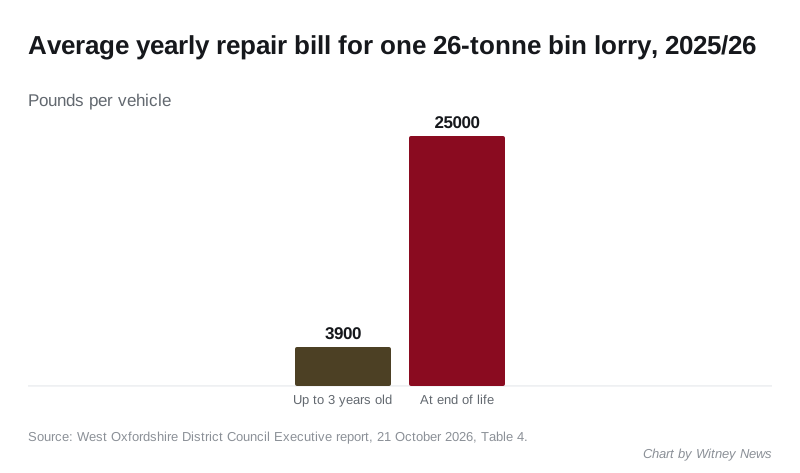
That gap is the council’s main financial argument for buying now. In 2025/26 a 26-tonne lorry up to three years old averaged £3,900 in repairs; one at the end of its life averaged £25,000 (report, Table 4).
Why not all electric
Councillor Alistair Wray, the council’s Executive Member for Environment, said:
“We are proud of our record of 99.95% successful collections across the district. We want to protect the reliable waste collections residents receive while continuing to reduce the carbon emissions from our fleet.
“We already use electric vehicles successfully and they remain our first choice wherever they are suitable and affordable. However, the technology is not yet suitable for some of the larger vehicles and collection rounds we rely on every day.
“Using certified HVO gives us a practical way to significantly reduce emissions by up to 83% compared to diesel vehicles, while we continue to test new technology and move towards a zero-emission fleet in the future.”
The council and its delivery partner Ubico have trialled larger electric waste vehicles. The trials showed quieter running and no exhaust emissions, but also problems with “charging reliability, vehicle range and overall operational resilience” across a large rural district, according to the council’s new Fleet Decarbonisation and Vehicle Procurement Strategy.
Cost is the other reason. An electric 26-tonne bin lorry costs around £200,000 more than a diesel one, the report says. The council runs 21 of them, so switching that whole group would add about £4.2 million before any spending on charging. The council owns only one of its two depots; the other, at Downs Road, is on a medium-term lease, and any work there to install the grid connections an electric fleet needs would require the landlord’s agreement.
Smaller vehicles are a different story. Battery vans were approved and introduced in 2024 and 2025, with charging points, and four new electric food waste collection vehicles are due for delivery at the end of this year, the council says.
What HVO is, and what it costs
HVO can go into any existing diesel engine without modification and can be blended with diesel in any proportion, so the council can switch back at any time, the report says. The certified HVO assessed for the council is made largely from waste materials and has independently assessed direct greenhouse gas savings of up to 83% compared with fossil diesel.
The sustainability of HVO has been questioned, and the council says it will only buy fuel that meets recognised standards: suppliers will have to show where the fuel comes from, its greenhouse gas emissions and its independent certification.
It is not cheaper. The report puts the extra cost of running the fleet on HVO at about £120,000 a year. On the council’s own figures, the fuel bill would have been £114,373 higher in 2024/25 and £92,962 higher in 2025/26, and the forecast for 2026/27 is £796,512 on HVO against £653,426 on diesel. HVO averaged £1.48 a litre over the three years against £1.22 for diesel, and its price follows diesel’s, so it gives no protection from price rises.
What happens next
The strategy sets out three phases: replacing life-expired vehicles and cutting carbon where possible from 2026 to 2028; trials, depot and grid planning from 2027 to 2030; and large-scale use of zero-emission vehicles from 2030 to 2035. The council’s target is carbon neutrality by 2030. Under current government plans, new vehicles up to 26 tonnes must be zero-emission by 2035 and heavier ones by 2040, the strategy notes.
Not every old lorry is in this round. Some of the vehicles that collect dry mixed recycling and glass are also near the end of their lives, but they cannot be replaced until the council agrees collection methods with its future partners under local government reorganisation, the report says.
What it means for you
Nothing changes on your bin day. The council’s case is that newer lorries mean fewer breakdowns and fewer missed or late rounds; your collection days are on our Witney bin collection days page.
The fuel switch has a running cost: about £120,000 a year more than diesel, paid from the council’s revenue budget, which council tax helps fund. Our Witney council tax bands page sets out what each band pays.
Have your say