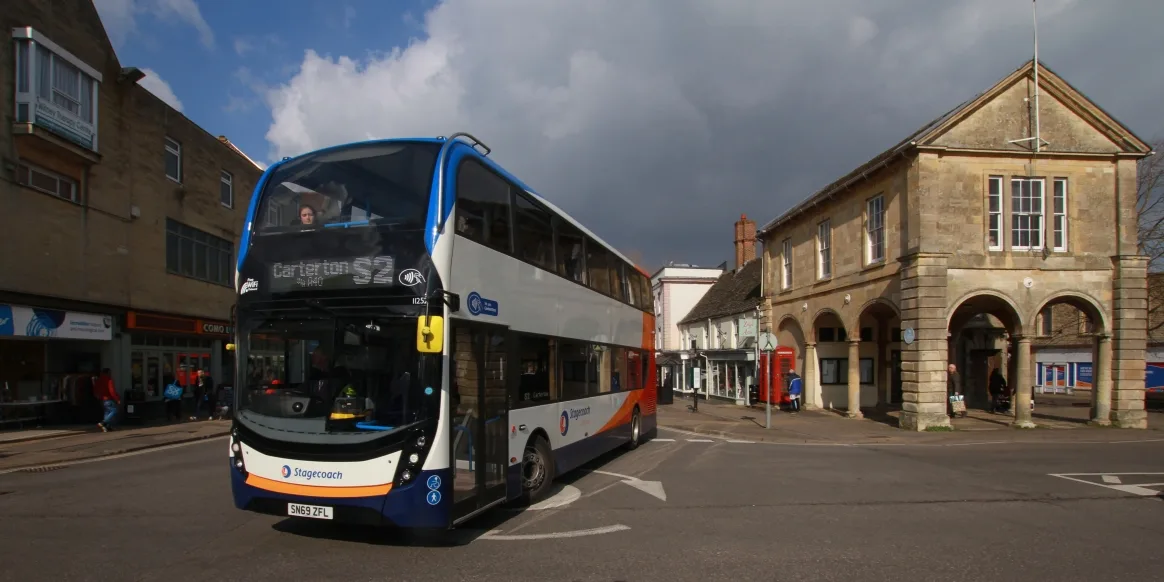

The OxBUS 2040 consultation on Oxfordshire's 15-year bus plan closed on 17 November. The final plan goes to county Cabinet for adoption in early 2027.
Updated 18 November: the consultation closed at 23.59 on 17 November, and the consultation page now says it has concluded. No response totals have been published yet. The final plan goes to the county’s Cabinet for adoption in early 2027.
Oxfordshire County Council is asking for views on its plan for the county’s buses up to 2040, and it is holding a drop-in at the Corn Exchange in Witney on Tuesday 3 November. The consultation on the draft plan, called OxBUS 2040: Plan for Bus, opened on 19 October. It closes at 11.59pm on Tuesday 17 November.
The details are on the council’s Let’s Talk consultation page. The council says the survey takes 10 to 15 minutes, and asks people to read one of the summary documents first.
Witney Town Council was told about the consultation at its meeting on 12 October. Its draft minutes record that it noted the correspondence and the 19 October start date.
When and where to ask questions
| Where | When |
|---|---|
| Corn Exchange, Witney | Tuesday 3 November, 10am to 2pm and 3pm to 7pm |
| Templars Square, Cowley, Oxford | Wednesday 4 November, 1pm to 4pm |
| Westgate Library, Oxford | Friday 6 November, 10am to 5pm |
| Town Hall, Banbury | Monday 9 November, 10am to 2pm and 3pm to 7pm |
| Cornerstone Arts Centre, Didcot | Friday 13 November, 10am to 2pm and 3pm to 7pm |
Witney’s is the only drop-in in West Oxfordshire. You can also email comments to TransportPolicyandStrategy@oxfordshire.gov.uk.
What the plan is for
The consultation summary says the county’s wider transport strategy aims to cut car journeys by a third by 2040. That could mean bus use growing by up to 250%.
Most of the network is not paid for by the council. The full draft plan says about 86% of bus mileage in Oxfordshire is run commercially, and 14% is supported by the council. The county spends about £12 million a year contracting bus services and improvements, including outside funding. It has set aside £6 million of Local Transport Fund capital money for 2027/28 to 2029/30 to start delivering the plan.
Reliability came out top when the council asked stakeholders what mattered most. They also asked for rural routes to be protected and for better links to hospitals, market towns and railway stations.
What it proposes
The plan is built around three themes: the network, services for customers, and cleaner vehicles and infrastructure. Its first phase of actions, for 2026 to 2030, includes:
- a minimum of one return bus journey a week to every parish of 300 or more people, by 2028/29. The current threshold is 500.
- a published list of “socially necessary” bus services, with set rules for what happens when one is proposed for cutting or changing
- simpler tickets, including more tap on, tap off contactless payment with fare capping
- a “bus impact assessment” on the county council’s own business cases
- highways and roadworks staff sitting on the group that works on bus reliability
The partnership commitments include agreeing a maximum of two timetable change windows a year from April 2027. The plan’s longer-term aims include a fully zero-tailpipe-emission bus fleet by 2040.
What it says about West Oxfordshire
The draft names few places. It says the county is carrying out a mass rapid transit study in West Oxfordshire, and that the findings will go into the final plan. The study itself has not been published.
One case study comes from the district. It says the 801 bus to Moreton-in-Marsh station was extended to serve Chipping Norton, about 12 miles north of Witney, from March 2024, with extra evening and Sunday journeys. Great Western Railway joined in 2026 with through tickets. The plan reports a 60% increase in customer numbers.
Some sections are unfinished. The draft says an analysis of people’s access to places by bus “has not been able to be completed in time” for the consultation, and the case studies section is still to be completed.
What happens next
The council will review the responses and change the draft where needed. The final plan, and a strengthened partnership agreement with bus operators setting out who does what, go to the county’s Cabinet for adoption in early 2027.
What it means for you
- To have your say: fill in the survey on the Let’s Talk page by 11.59pm on 17 November, or email the address above.
- To ask in person: go to the Corn Exchange on 3 November. The morning session ends at 2pm and the evening one runs from 3pm to 7pm.
- If you live in a village: the one-journey-a-week minimum, and the list of socially necessary services, are the two proposals most likely to affect you. The plan does not name which parishes would gain a service.
- If your bus changed in September: the operators’ 20 September changes are already in place. We covered them route by route in Witney’s buses changed on 20 September.
Sources
- OxBUS 2040: Plan for bus, Let’s Talk Oxfordshire, Oxfordshire County Council, for the consultation dates, the drop-in events, the email address and the timetable to adoption.
- OxBUS 2040 consultation summary, Oxfordshire County Council, autumn 2026, for the case for change, the stakeholder feedback, the three themes and the Phase 1 actions.
- OxBUS 2040: Plan for Bus, consultation draft, Oxfordshire County Council, for the commercial share of the network, the £12 million and £6 million figures, the 300-resident threshold, the timetable change windows, the West Oxfordshire study and the 801 case study.
- Draft minutes, Full Council, 12 October 2026, Witney Town Council, item 530.
Have your say