
£643,090 went to West Witney Sports and Social Club as S106 spending rose 72% to £1.89m in 2025/26. The council still holds £13.4m. Where the money went.
West Oxfordshire District Council spent £1.89 million of developer money on local projects in the year to March 2026, 72% more than the year before, and the single biggest cheque, £643,090, went to West Witney Sports and Social Club. The council still held £13.42 million in Section 106 (S106) money on 1 April 2026.
The figures are in the council’s Infrastructure Funding Statement for 2025/26, which every planning authority must publish by December each year, and in a council news release sent to Witney News on 13 October.
S106 money is paid by developers under legal agreements tied to their planning permission, to cover the facilities that new homes create a need for. It usually arrives in instalments when a set number of homes is built or occupied.
Where the £1.89 million went
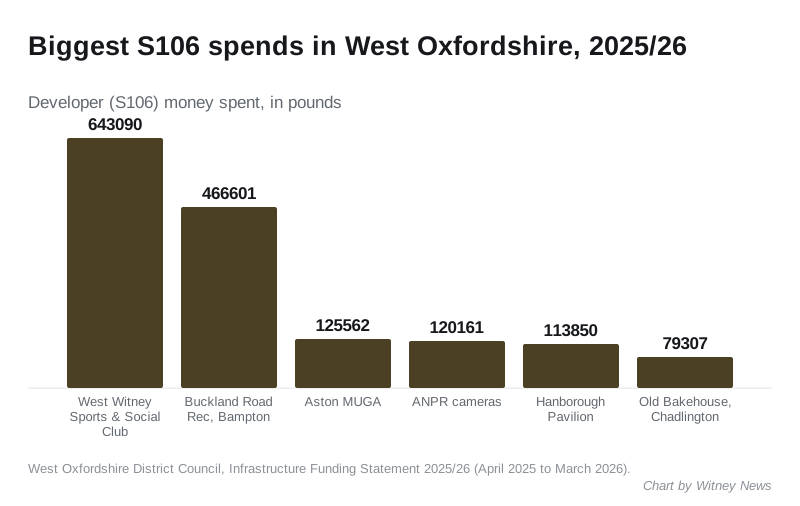
The statement puts spending at £1,892,997 for 2025/26, against £1,101,131 the year before. Around £1.3 million of it went on four sport and recreation projects:
- £643,090 for improvements at West Witney Sports and Social Club
- £466,601 for Buckland Road Recreation Ground in Bampton
- £125,562 for a new multi-use games area (MUGA) at Aston
- £113,850 to extend Hanborough Pavilion and its changing rooms
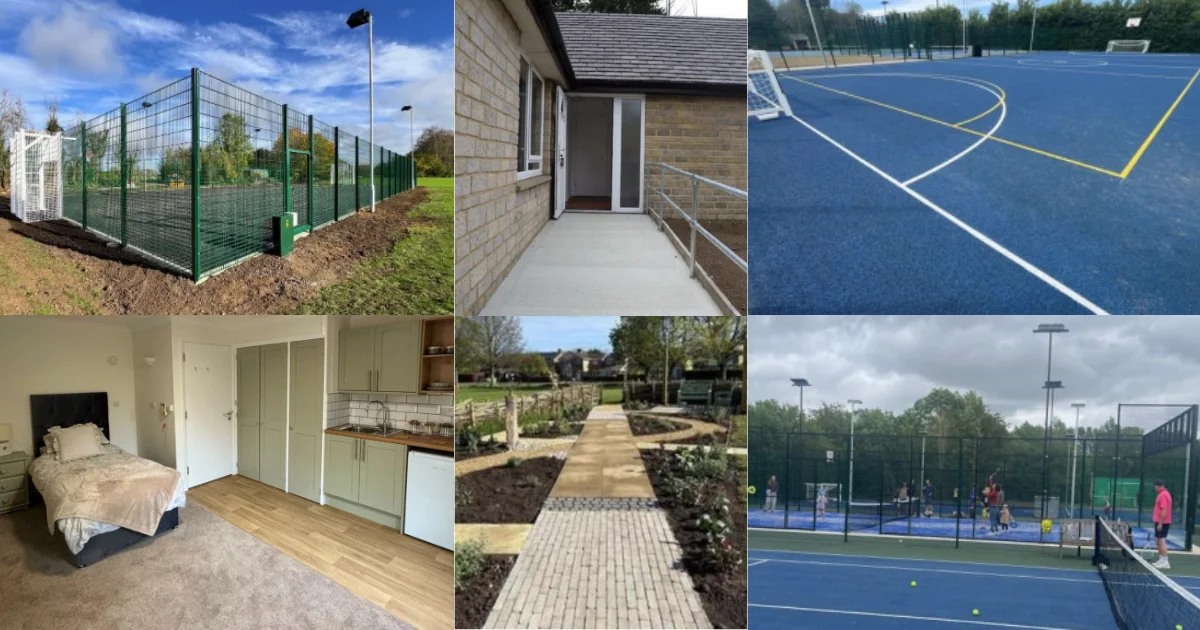
In Bampton the money paid for a bigger skate park, a new MUGA, a padel court, and new floodlights for the tennis courts. Aston’s new MUGA, at Cote Road Recreation Ground, is lit and marked out for football, basketball, netball, hockey and tennis, so it can be used all year.
Away from sport, £120,161 went to Thames Valley Police for Automatic Number Plate Recognition (ANPR) cameras, and more than £41,000 to attenuation ponds at Brize Meadow in Brize Norton, which hold back surface water to cut flood risk.
Housing took a smaller share. £79,307 went to refurbishing the Old Bakehouse in Chadlington, a supported living home for older residents, and the council says S106 money also paid for a specially adapted bungalow for a local family, with step-free access, wider doorways and an adapted kitchen and bathroom, so that a young wheelchair user can live more independently.
The Witney money
In Witney itself, the statement lists:
- £643,090 to Witney Town Council for West Witney Sports and Social Club
- £35,043 to Witney Town Council for the Corn Exchange
- £30,933 towards affordable housing in Witney
- £7,150 to landscape firms for design work on Marriotts Walk public realm improvements
- small sums for artist-led public art workshops in the town
More is lined up. The council has formally allocated £1,002,101 to the 3G pitch at West Witney Sports Ground, the largest single allocation in the statement, and it holds £669,485 in pooled money earmarked for Witney town centre improvements.
The release says improvements to Marriotts Walk, Witney High Street and Market Square, and the Witney Wayfinding project, are expected to have funding allocated during the current financial year.
£13.4 million still in the bank
Spending outstripped what came in. The council collected £1.02 million in S106 money during the year, 60% less than the £2.53 million it collected in 2024/25, and spent £874,398 more than it took. That brought the total it holds down 7%, from £14.38 million to £13.42 million.
Most of that balance, £9.40 million, is “pooled”: received before April 2025 but not yet formally allocated to a project. The biggest pooled pots are £4.68 million for sports, play and leisure and £2.91 million for affordable housing.
The council says pooled does not mean unplanned. “Funding can already be earmarked for infrastructure while a project is being developed, but is only formally recorded as allocated once the project is ready and the funding has been approved,” the release says, adding that for larger projects contributions “may also need to build up over time before there is enough funding to deliver them.”
The statement puts the drop in collections down to the pace of house completions, and says S106 receipts have risen and fallen year on year since 2021/22.
New agreements signed in 2025/26 secured £3.39 million in future contributions, 2% less than the year before, along with 273 affordable homes, up 4%, and 35 self-build or custom-build plots. That money arrives only if and when the homes are built.
The council also began charging its new Community Infrastructure Levy on 31 January 2026, a per-home charge on most new housing. No CIL bills were issued in the year because the levy only becomes payable once building starts.
What the council says
Cllr Liz Leffman, Executive Member for Planning and Infrastructure at West Oxfordshire District Council, said:
“As a Council, we have been clear that infrastructure must keep pace with growth. As new homes are built, we need to make sure development is supported by the facilities and services our communities need.
“To enable this, we have been committed to ensuring S106 funding is directed where it is needed most, getting that money into our communities, and this report shows we have turned a corner. Alongside introducing the Community Infrastructure Levy, we are making sure new development contributes towards the infrastructure our communities need.
“These projects show the real difference that funding can make, from giving people more opportunities to be active to helping residents live more independently. We know there is more money to put to work, and we will keep working with our partners to turn that funding into improvements for communities across West Oxfordshire.”
The council says it is working with local partners to bring forward more projects that can use developer funding. For what the district says it will need as the Local Plan grows Witney, see our report on the infrastructure delivery plan to 2043.
Have your say