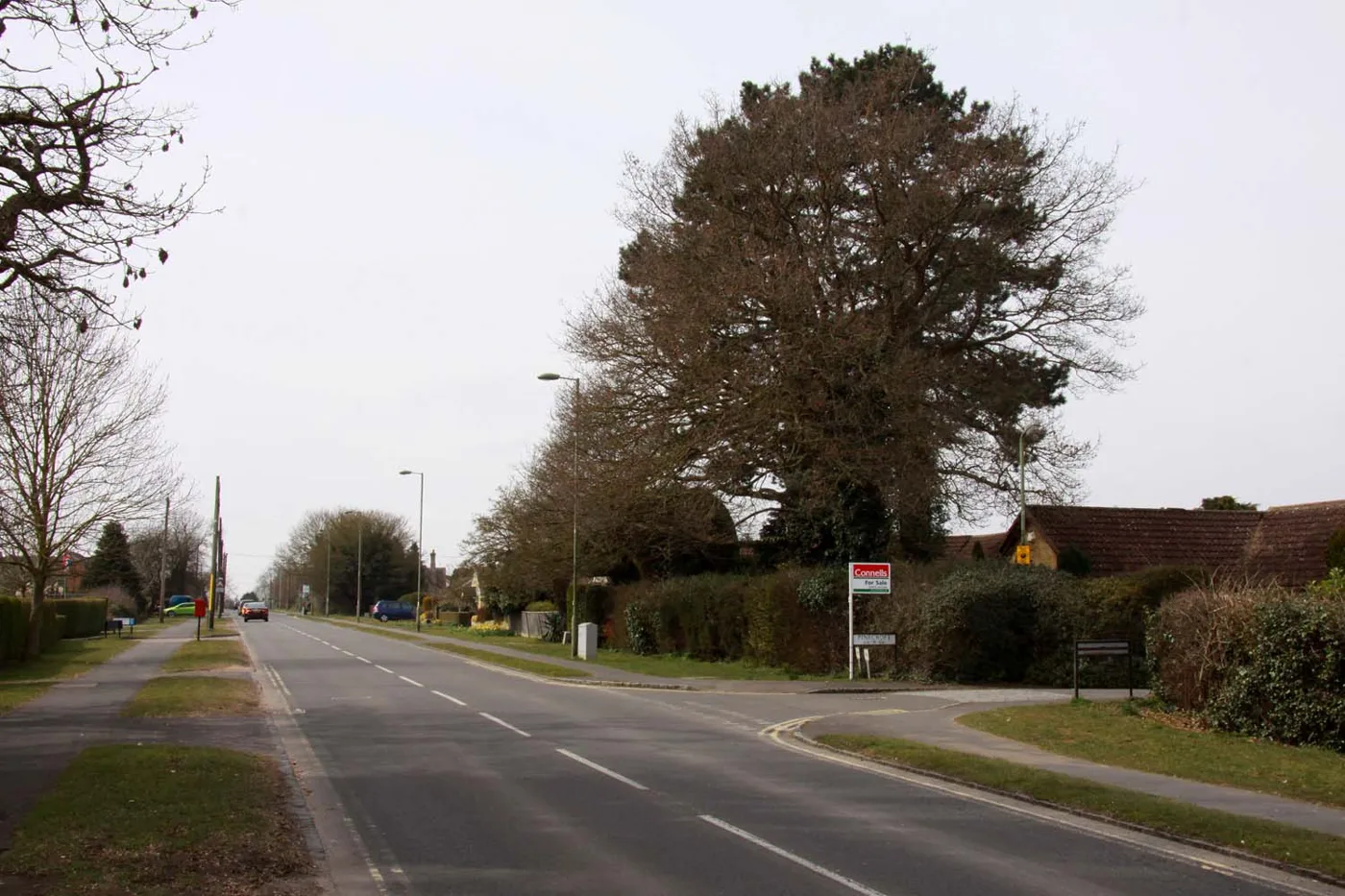

Four Carterton roads close to most cars at school run times from 2 September, enforced by camera. In the county's consultation, 73% of 342 responses opposed it.
Four residential roads in Carterton close to most motor vehicles at school drop-off and pick-up times from Wednesday 2 September, the first morning of the autumn term at Edith Moorhouse Primary School. Number plate cameras will enforce it, and driving in without an exemption can bring a £70 penalty.
Oxfordshire County Council made the experimental order on 17 August 2026. It covers the streets around Edith Moorhouse Primary School and St Joseph’s Catholic Primary School, about six miles west of Witney, and runs for a maximum of 18 months as a trial.
The council’s own consultation found more opposition here than at any of the other three schemes it approved at the same time. Of 342 responses on the Carterton proposal, 73 per cent opposed it overall and 25 per cent supported it.
When the restriction applies
- 8.15am to 9.15am and 2.30pm to 3.30pm
- Monday to Friday
- Term time only, so not during school holidays
- From Wednesday 2 September 2026
Which roads, and where the camera points are
The order lists four entry points where motor vehicles are prohibited during those hours:
- Edgeworth Drive, at its junction with the B4020 Upavon Way
- Richens Drive, at its junction with the B4020 Upavon Way
- Lawton Avenue (northern end), at its junction with Rock Close and Arkell Avenue
- Lawton Avenue (southern end), at its junction with Alvescot Road
Those four points enclose the area the county consulted on, which also takes in Carter’s Close, Home Close, Lavender Place, Rose Close and Spurrett Gardens. Walking, wheeling, cycling, scooters and e-scooters are unaffected at all times.
Note that Upavon Way itself is not in the scheme, and it has its own disruption coming. A separate order closes it overnight between Carr Avenue and Lord Close from 1 to 26 September for resurfacing, which we cover in Witney roadworks and travel.
What it means for you
If you live inside the zone, you need an exemption, and it is not automatic. Oxfordshire County Council says exemptions are free but must be applied for at least 10 working days before you need to use one. A penalty notice can be issued if you drive in before yours is approved. Exemptions are digital, so there is no permit to display, and they have to be renewed every time you change vehicle.
You must apply for an exemption if you are one of these:
- residents of the school street, and a resident’s regular visitor
- registered and unregistered carers
- blue badge holders, whether pupil, parent, carer or staff
- staff of businesses inside the zone who need to park
- anyone using private off-street parking reached through the zone
- school staff and regular school visitors who need to park on site
These are exempt without applying:
- emergency and other public service vehicles, including waste collection
- taxis, public hire vehicles and buses
- school transport vehicles, Dial-a-Ride and specialist passenger transport
- branded and liveried delivery vans registered as commercial vehicles, such as Royal Mail, UPS and DPD
The school can also grant exemptions at its discretion for SEND pupils with mobility or behavioural needs, and for short-term illness or injury, such as a parent collecting a sick child.
The penalty for driving into a school street without an exemption is the county’s standard moving traffic charge: £70, reduced to £35 if paid within 21 days.
Letters were due to go to affected households, and the council said residents would get at least four weeks’ notice before the trial starts. Exemption applications for phase 3 schools could not be accepted until those letters had been sent.
What the consultation said
The county consulted between 1 September and 13 October 2025, and 913 people responded across all four proposals. Carterton drew 342 of them, and 95 per cent of those respondents said they lived in Carterton. 191 said they lived near the school and 142 were a parent or carer of a child there.
On the overall proposal, 68 per cent strongly opposed and 5 per cent partly opposed, against 21 per cent strongly supporting and 4 per cent partly supporting.
Opposition was strongest among the people closest to it:
| Group | Strongly oppose | Strongly support |
|---|---|---|
| All respondents | 68% (229) | 21% (70) |
| Live near the school | 64% (119) | 24% (44) |
| Parents and carers | 72% (102) | 18% (25) |
School staff went the other way: 44 per cent of those who responded strongly supported the scheme.
The cameras drew a separate question, and a similar answer. Sixty-nine per cent strongly opposed the use of number plate recognition to enforce the closure, and 21 per cent strongly supported it.
Officers grouped the 232 written comments on the location into recurring themes:
- displaced parking, raised by 29 per cent of commenters, with a further 10 per cent naming Alvescot Road specifically as where cars would move to
- working parents who drive their children to school on the way to work, 16 per cent
- family and friends visiting during the restricted hours, 9 per cent
- deliveries arriving during the restricted hours, 6 per cent
Nine comments asked for parking enforcement instead of a school street. Others suggested a one-way system on Lawton Avenue, a crossing patrol officer, or spending the money on road surfaces.
Carterton was the outlier
The same December 2025 decision approved school streets at Harriers Banbury Academy and at Willowcroft Community Primary and St Birinus Boys School in Didcot, plus an extension to the existing scheme at Sandhills Community Primary in Headington. Support varied sharply between them.
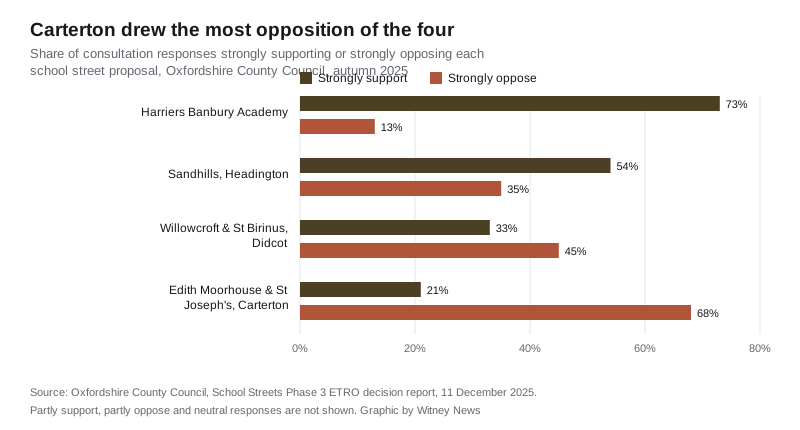
Strong support and strong opposition ran as follows:
- Harriers Banbury Academy: 73 per cent strongly support, 13 per cent strongly oppose
- Sandhills, Headington: 54 per cent strongly support, 35 per cent strongly oppose
- Willowcroft and St Birinus, Didcot: 33 per cent strongly support, 45 per cent strongly oppose
- Edith Moorhouse and St Joseph’s, Carterton: 21 per cent strongly support, 68 per cent strongly oppose
Carterton was the only one of the four where more than two-thirds of respondents were strongly opposed.
Why it was approved anyway
The report to the cabinet member set out the case as road safety and air quality at the school gate, developed with the schools in response to concerns they had raised about parental parking and congestion. Funding for the consultation and the installation came from an Active Travel England Tranche 4 extension grant. The running cost of the cameras, the report says, is met by the income from the penalty charges they generate.
The start date slipped from the original plan because of what the council calls minor delays in procuring the cameras.
Because it is an experimental order rather than a permanent one, the trial is itself the consultation. Anyone may object to the scheme being made permanent within six months of the day it comes into force, in writing to Oxfordshire County Council’s traffic regulation team at County Hall, New Road, Oxford OX1 1ND. The council says it will run a full public consultation and monitor traffic and parking during the trial before deciding. A challenge to the order’s validity in the High Court has a tighter window: six weeks from 24 August 2026.
Sources
- Oxfordshire County Council statutory notice of the Phase 3 School Streets experimental orders, published 20 August 2026, for the making date, the coming-into-force date, the four Carterton closure points, the hours and the objection periods.
- Banbury, Didcot, Carterton and Oxford: experimental school streets active travel measures, delegated decision report, 11 December 2025 for the approval, the funding, the enforcement method and the cross-scheme support figures.
- Phase 3 School Streets consultation report for the 342 Carterton responses, the breakdown by group and the comment themes.
- Apply for a School Street exemption, Oxfordshire County Council for the 2 September start date, the procurement delay and the application deadline.
- About exemptions from the School Streets charge for who must apply and who is exempt automatically.
- Moving traffic enforcement, Oxfordshire County Council for the £70 penalty charge.
- Edith Moorhouse Primary School term dates for the first day of the autumn term.
Have your say